With the development of the automation industry, the demand for bearings is increasing, making the selection of a suitable bearing for your machine particularly important. I will now introduce how to choose a suitable bearing for your linear module: 1. Self-aligning roller bearings: Primarily used to bear radial loads, while also capable of withstanding smaller axial loads. They have high radial load capacity, good self-aligning performance, and allow the inner ring to tilt relative to the outer ring by no more than 2.5°. Tapered bore bearings allow for axial movement of the inner ring, and adjustable radial clearance. Mounted on a locking sleeve, these bearings are suitable for mounting on smooth shafts without shoulders. Servo electric cylinders are suitable for applications requiring frequent bearing installation and removal. 2. Stainless steel bearings: Stainless steel bearings are characterized by high precision, low noise, corrosion resistance, acid and alkali resistance, non-magnetic properties, and high temperature resistance. 3. Oil-impregnated bearings: Under variable load conditions, the coefficient of friction, temperature rise, and vibration values are all higher than under static load conditions. The coefficient of friction of oil-impregnated bearings is lower than that of ordinary bearings, while their vibration characteristics are the opposite. In linear motors, oil-impregnated bearings exhibit better tribological performance than ordinary bearings, but in terms of vibration characteristics, ordinary bearings are superior to oil-impregnated bearings. 4. Spherical roller bearings: These consist of a double-sealed spherical roller bearing and a cast (or stamped steel) bearing housing. The internal structure of spherical roller bearings is the same as that of deep groove ball bearings, but the outer ring of this type of bearing has a truncated spherical outer surface that matches the concave spherical surface of the bearing housing, allowing for self-aligning. Typically, this type of bearing uses set screws, eccentric sleeves, or adapter sleeves to fix the inner ring to the shaft, and the miniature electric rotor rotates with the shaft. Mounted bearings are compact, easy to install and disassemble, and suitable for simple supports. 5. Needle roller bearings: These bear radial loads and have a small outer diameter for single-shaft arms, making them particularly suitable for structures with limited radial installation dimensions. 6. Thrust ball bearings: can only withstand unidirectional axial loads, and are used by orthogonal manipulators to limit unidirectional axial displacement. They have low limiting speeds. Double-direction thrust ball bearings can withstand bidirectional axial loads, but limit bidirectional axial displacement. They also have low limiting speeds.
Read next
CATDOLL Luisa Hard Silicone Head
The head made from hard silicone does not have a usable oral cavity. You can choose the skin tone, eye color, and wig, ...
Articles
2026-02-22

CATDOLL 108CM Dodo (TPE Body with Hard Silicone Head)
Articles
2026-02-22

CATDOLL 130CM Sasha
Articles
2026-02-22
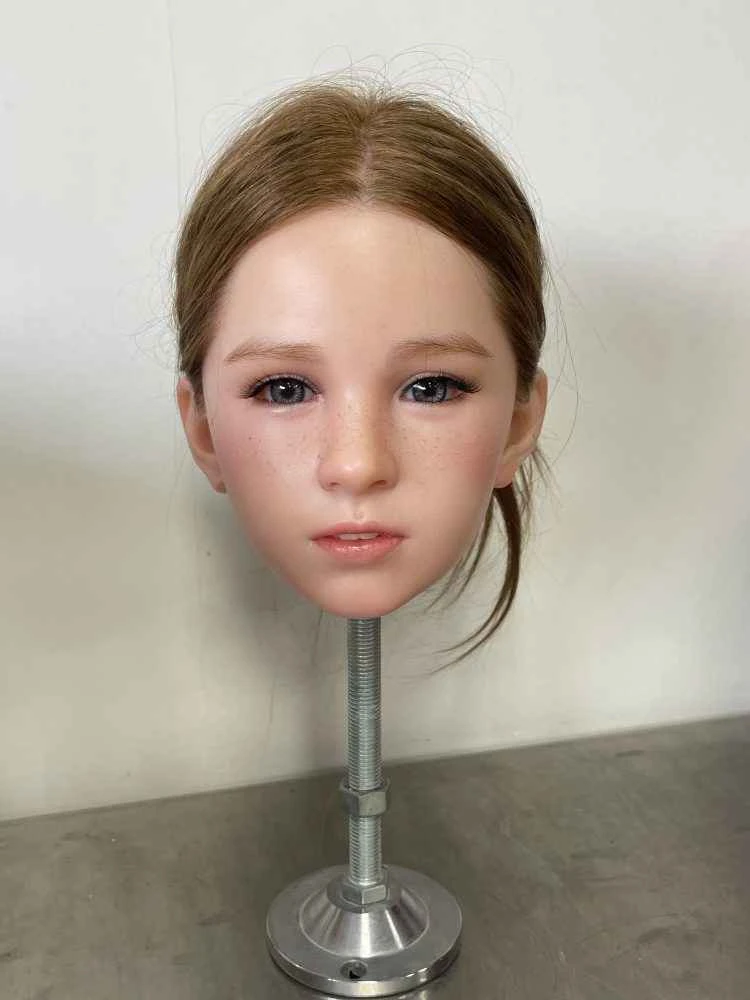
CATDOLL Dolly Hard Silicone Head
Articles
2026-02-22