Medical robots are robots used in medicine. They include surgical robots. In most remotely operated vehicles, these vehicles use an activator on one side to control an "actuator" on the other side.
1. da Vinci Surgical Robot
The da Vinci Surgical System, manufactured by Intuitive Surgical, is the world's most successful surgical robot and most widely used medical robot. Since the first generation of the da Vinci robot was introduced in 1996, Intuitive Surgical has developed it into its fourth generation.
Surgery using the da Vinci Surgical System typically requires only a few small incisions, each less than 2 centimeters in diameter. Its accuracy is extremely high, meaning less bleeding, faster healing, and a lower risk of infection. In 2015, Leonardo da Vinci's surgical robot became an internet sensation for sewing a grape into a narrow bottle. The da Vinci Surgical System has become the standard for robot-assisted surgery.
The approved applications include: laparoscopic surgery in urology, conventional laparoscopic surgery, laparoscopic surgery in gynecology, thoracoscopic surgery, endoscopic-assisted cardiac resection, coronary artery anastomosis, and mediastinectomy.
2. Prosthetic robots
In recent years, the field of prosthetics has made tremendous progress. The question is no longer "Can we make suitable limb replacements?" but rather "Can we make them better than the original limbs?"
At MIT's Biocommunication Lab, researchers have created a gyroscope-driven robotic limb that can track its position in three-dimensional space and adjust its joints at a rate of over 750 times per second. Most importantly, they have developed a biomimetic skin and neural implant system that allows users to receive tactile feedback from the prosthesis and consciously control it, just like a normal limb.
3. Endoscopic robot
Endoscopy is a procedure in which a small, long-wire camera is "naturally" inserted into the body to look for signs of injury, foreign objects, or disease. This examination is uncomfortable, but it may well be a thing of the past. Some companies have developed slender, flexible robots that doctors can remotely control, like a remote controller, to an ideal and precise location. The doctor can then place it there, avoiding handshakes, and use a variety of tools, from biopsies to burns. Impressively, there's the "capsule endoscope." Patients simply swallow a pill-sized robot, and doctors can collect data and take pictures to diagnose diseases.
4. Exoskeleton Robots
It's a miracle that exoskeleton robots are being used to help paralyzed people walk again. Exoskeleton robots can also be used to correct deformities or assist muscle movement and healing injuries, potentially aiding in the recovery of brain or spinal cord injuries. Most exoskeleton robots operate through user input and preset movements, but with advancements in neural interfaces, it's only a matter of time before patients can control exoskeleton robots with their thoughts.
5. Microrobot-based targeted therapy
Targeted therapy microrobots use tiny mechanical particles to observe drugs or other microscopic objects and deliver them to specific target sites in the body. Despite their relatively recent emergence, targeted therapy microrobots hold great promise. These robots can directly deliver radiation to tumors or deliver drugs only to the desired organs to reduce side effects. Intriguingly, how should these particles achieve their goals? Many methods exist, but recent research focuses on guiding microrobots with micro-helical tails to rotate forward through magnetic fields and reach specific sites in the body via blood vessels.
6. Disinfection robot
Hospitals aren't as clean as people imagine. When people go to the hospital for treatment, they may leave with illnesses. Due to the extensive use of antibiotics, hospitals can become breeding grounds for stubborn antibiotic-resistant bacteria, making the cleaning of hospital rooms extremely important! Disinfection robots can automatically move into patient rooms and then irradiate them with high-energy ultraviolet light for several minutes until no microorganisms survive.
7. Nursing Robot
Millions of elderly, vulnerable, or intellectually disabled people worldwide suffer from chronic loneliness and lack of motivation. These patients often require regular check-ups by caregivers, a problem in areas with caregiver shortages. Escort robots address both of these issues, truly improving the lives of many. If a patient falls, the escort robot can also call an ambulance. For example, although BUDDY is a relatively new product, it won the 2018 Best Innovation Award because it can interact with presenters based on their emotional state.
8. Remote medical robots
Telemedicine robots are playing a crucial role in the healthcare field, bringing top-tier doctors and expertise to underserved communities and remote areas. Doctors in one region can communicate with patients and doctors in another region via a remote robot, sharing their knowledge and diagnostic advice in real time, at a fraction of the cost and effort of an individual traveling there.
9. Nurse Robot
Nurses are the lifeline of any healthcare setting. But they are also incredibly overworked. They are exhausted after long periods of work, not to mention nurses in many other settings. This is where nursing robots come in. Nursing robots can fill out electronic forms, measure vital signs, and monitor patients. Some newer nursing robots target other mundane tasks nurses encounter, such as moving trolleys and beds between rooms and even drawing blood! Nursing robots can save nurses time, allowing them to dedicate more time to caring for patients.
10. Medication Dispensing Robot
Vending machines are common in daily life. In hospitals, patients typically take prescriptions printed by doctors, and then a staff member dispenses the medication at the pharmacy. In fact, you can think of a pharmacy as a vending machine, eliminating the need for dedicated staff and robots to dispense medication.
A concept pharmacy at the University of California, San Francisco, has been operating for nearly five years and has been approved for use by many hospitals. Shanghai Seventh People's Hospital also has a dispensing robot; one robot can perform the work of two people.
11. Artificial Intelligence Diagnostic Robot
Diagnostics may be the most dynamic area for robotics in medicine. Through machine learning on thousands of samples, scientists can train artificial intelligence to perform tasks better than humans. The application of AI in diagnostics has profound implications. The FDNA system uses facial recognition software to screen for more than 8,000 diseases and rare genetic disorders with astonishing accuracy. For example, AI created by a team at New York University can determine the risk of diabetes, heart failure, or stroke by scanning thousands of medical documents. Robots may be the first stop in the future of diagnostics.
12. Assisted biopsy robot
This is a cool, potentially life-saving advancement, known as the MURAB (MRI and ultrasound robot-assisted biopsy) project leader.
This is a minimally invasive technique for early cancer diagnosis, guided to the biopsy site using a novel robotically operated transducer MRI/ultrasound combination. It then scans the target to obtain its overall data, allowing the surgeon to select the exact location they want to biopsy from the three images created. Finally, the robot exits as it came in, leaving the patient with only a cut.
13. Artificial Intelligence Epidemic Robot
Artificial intelligence excels at identifying patterns in data and making predictions, which explains why epidemiology is the next target for AI systems. We've already seen AI robots used in the fight against COVID-19. These algorithms analyze local disease outbreak data and cross-reference it with all available medical databases to predict the timing and location of outbreaks and how to prevent their spread. While there are many products in this field, the coolest one was deployed in Malaysia in 2020 to combat a dengue fever outbreak. With an accuracy rate approaching 85%, it saved thousands of lives and potentially millions of dollars.
14. Antibacterial nanorobots
Antimicrobial nanorobots are tiny machines made of gold nanoparticles coated with platelets and red blood cells that can directly clear bacterial infections from a patient's bloodstream. They achieve this by mimicking the targets of bacteria and their toxins, then capturing the bacteria in a nanomesh when they approach. They can even be guided through a patient's body by targeted ultrasound to accelerate the clearance and treatment of localized infections.
Most importantly, nanorobots could be used to replace broad-spectrum antibiotics because they utilize the bacteria's natural response to remove them from the system, which could have a significant impact on the rise of antibiotic-resistant diseases.
15. Robotic Clinical Training
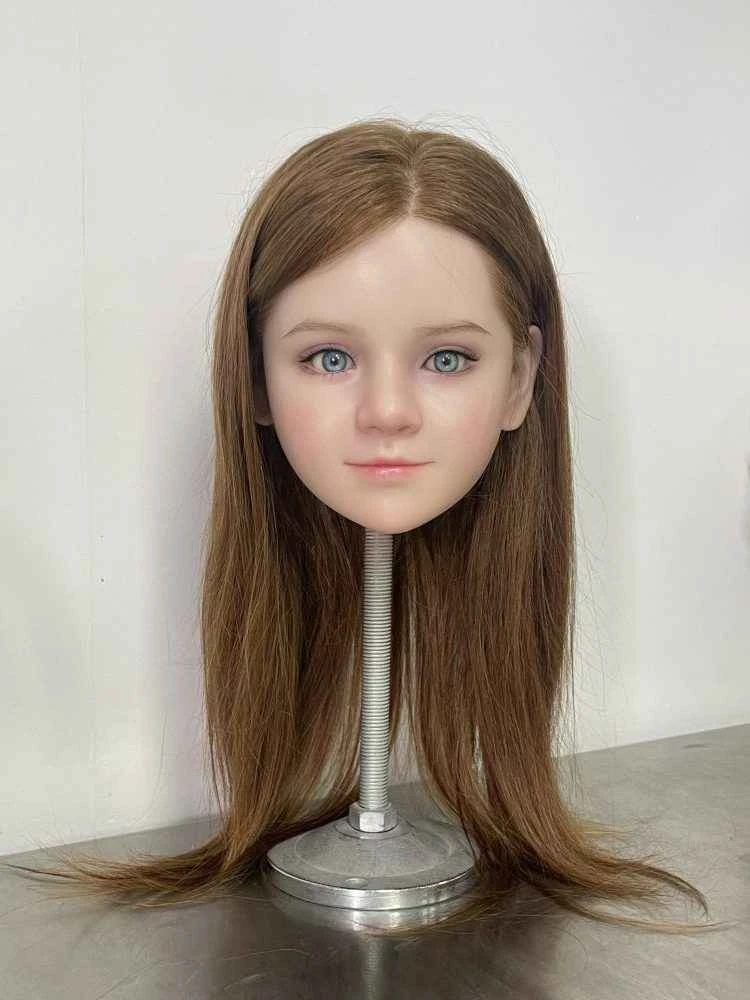
Clinical training robots are similar to aircraft simulators used in pilot training. The image below, shown as the HAL pediatric training robot, can simulate facial expressions and produce tears; its pupils can dilate, its eyes can track movement, and it can even sweat. Its airway can be intubated, and it can simulate heart, lung, and bowel sounds, generate a pulse, etc. HAL can be used to train for finger prick blood collection or intravenous injections.