Share this

Introduction to the Instrumentation and Control System of the Sanmen Nuclear Power Plant Pretreatment Water Plant

2026-04-06 06:25:53 · · #1
Abstract: The control system of the Sanmen Nuclear Power Plant pretreatment water plant adopts a PLC+DCS control method, and all main processes are automatically controlled, making it one of the most advanced pretreatment water plants in China. Keywords: Control system, PLC, DCS, MACS, S7300 1. Introduction to the Pretreatment Water Plant Process 1.1 Main Processes and Parameters of the Pretreatment Water Plant • Water Source – Water is transported from Luo'ao Reservoir to the water plant via two DN600 pipelines. • Design Output – 25,000 m³/d • Water Quality – Effluent turbidity ≤ 1 NTU; Effluent residual chlorine: Residual chlorine in domestic water and plant water < 1.5 mg/L; Demineralized water raw water < 0.5 mg/L • Pretreatment Process – Mechanically stirred clarifier + air-water backwashing uniform granular filter, with sludge treatment considered. • Chemical Dosing – Polyaluminum chloride + sodium hypochlorite disinfection. The water purification process adopts a two-stage treatment process of clarification and filtration. 1.2 Main Structures of the Pretreatment Water Plant The main structures include: distribution well, mechanically stirred clarifier, homogenized filter media, domestic water clear water tank, chemical raw water clear water tank, secondary pump station and high-efficiency distribution room, chemical dosing room, wastewater tank, sludge tank, sludge balance tank, sludge disposal room, and other ancillary facilities. 1.3 Pretreatment Water Plant Engineering Scheme The scheme for this project is as follows: 1) Chemical mixing uses a pipeline mixer; 2) Flocculation and sedimentation uses a mechanically stirred clarifier; 3) Filtration uses an air-water backwash homogenized filter media; 4) Disinfection uses sodium hypochlorite; 5) Sludge dewatering uses a centrifugal dewatering machine. 2. Introduction to the Pretreatment Water Plant Control System 2.1 Purpose and Functions of the Pretreatment Water Plant Control System The pretreatment water plant control system centrally monitors all instrument parameters and electrical equipment status on the LCD screen in the central control room of the water plant, and automatically or manually controls valves, pumps, and other equipment in the system to meet the measurement and control requirements of the process. The water plant's process system comprises four subsystems: alum addition system, chlorination system, sludge treatment system, and filter system, each equipped with its own PLC controller. These four PLC controllers function as control substations within the overall plant instrumentation and control system. Operators in the central control room can monitor and control all process equipment outside these four subsystems, and can also monitor and control the process equipment within these four systems through these PLC control substations. Simultaneously, the central control room can access programs within these four PLC substations to perform functions such as parameter resetting. This necessitates that this DCS control system adhere to the same communication protocol as these four PLC substations. Since all process subsystem PLCs in this project are Siemens S7300 PLCs, the PROFIBUS communication protocol is used with the Hollysys MACSV DCS to ensure communication between this system and the PLCs integrated into the process equipment. [align=center]Figure 1 Schematic diagram of control system equipment configuration[/align] 2.2 Structure and hierarchical division of the pretreatment water plant control system 2.2.1 Structure of the pretreatment water plant control system a) The water plant instrumentation control system completes data acquisition, parameter monitoring, regulating valve control, and automatic and manual equipment control (including PID control, interlocking logic, etc.) to meet the requirements of various operating conditions and ensure the safe and efficient operation of process equipment. b) The system consists of remote I/O cabinets, control cabinets, PLC substations built into the process equipment, and human-machine interfaces. The remote I/O cabinets, control cabinets, and PLC substations built into the process equipment complete on-site data acquisition, control, and management. These devices are connected to the host computer in the control room via a communication network. The host computer in the control room uses graphical human-machine interface software for human-machine interaction, realizing the control, coordination, and management of the entire DCS control system. The system is easy to configure (graphical, modular), easy to use, and easy to expand. The system is configured with a redundant network structure; any network failure will not affect the normal operation of the system. c) The system employs appropriate redundancy configuration and self-diagnostic functions down to the module level, ensuring high reliability. Failure of any component within the system will not affect the operation of the entire system. d) System parameters, alarms, and self-diagnostic functions are highly centralized, displayed on the monitor and printed on the printer, adhering to the principles of functional and physical decentralization. e) The computer system's operation and configuration interfaces are both in Chinese. 2.2.2 Control System Layering: The control system is divided into three layers: Layer 0: Field primary instruments (temperature, pressure, flow rate, level), analysis cabinets (residual chlorine, pH, turbidity), electric actuators (pumps, valves, blowers, mechanical agitators, sludge scrapers, sludge dewatering centrifuges, level switches) Layer 1: PLC (chlorination, alum addition, sludge, filter), DCS cabinets (801-1CP, 801-2CP, 802CP), production water pump frequency converter cabinets (2 units, one frequency converter cabinet for every two production water pumps) Layer 2: One operator station, one engineer station. 2.3 A Brief Introduction to the Process Subsystem Implemented by PLC: The PLC adopts the Siemens S7300 system. All main process-related controls are completed by the Siemens S7300 series PLC. It can automatically control the operation of the control unit equipment according to the water treatment process requirements. Simultaneously, it collects real-time production data such as water level, pressure, residual chlorine, turbidity, pH value, and flow rate through field instruments. The PLC controller analyzes the collected data and, through automatic control, achieves automatic alum and chlorination, and automatic flushing of the air-water backwash filter. When the set alarm value is exceeded, an alarm signal is issued to remind the operator. Four PLCs communicate with the DCS via PROFIBUS-DP. The operator station on the DCS side acts as the host computer, monitoring each PLC subsystem (chlorination, alum addition, filter, mechanical stirring, and sludge dewatering, a total of five). In the event of a communication interruption, the PLC independently completes the automatic control of the main process. 2.4 Introduction to DCS Control System 2.4.1 Introduction to MACS Series DCS The HOLLiAS-MACS system is the fourth-generation DCS system launched by Hollysys after successfully developing and applying the HS-DCS-1000 and HS2000 systems. It was developed based on a systematic summary of feedback and suggestions from users across various industries, and a thorough investigation of the latest developments in computer technology, network technology, application software technology, and signal processing technology. It utilizes the most advanced technologies and mature advanced control algorithms. It holds a leading position in China and has been successfully applied to large-scale control systems in the power and petrochemical industries. The MACS system is a comprehensive automation system composed of engineering stations, operator stations, field control stations, communication control stations, and data servers connected by Ethernet and a control network using fieldbus technology. It performs the functions of large and medium-sized distributed control systems (DCS) and large-scale supervisory control and data acquisition and monitoring systems (SCADA). The MACS system hardware consists of engineering stations, operator stations, field control stations (including main control unit devices and I/O unit devices), communication control stations, system servers, system networks, monitoring networks, and control networks. The MACS system software includes: engineering station configuration software; operator station online software; field controller operation software; server software, etc. [align=center] Figure 2 MACS System Structure[/align] 2.4.2 Main DCS Equipment and Functions Engineering Station The engineering station runs the corresponding configuration management program to centrally control and manage the entire system. The engineering station mainly has the following functions: Configuration (including system hardware equipment, database, control algorithm, graphics, reports) and setting of related system parameters. Downloading and online debugging of field control stations, downloading servers and operator stations. After running the operator station real-time monitoring program on the engineering station, the engineering station can be used as an operator station. Operator Station The operator station runs the corresponding real-time monitoring program to monitor and control the entire system. The operator station mainly performs the following functions: Displaying, querying, and printing various monitoring information, mainly including process flow diagram display, trend display, parameter list display, alarm monitoring, log query, system equipment monitoring, etc. Manual intervention in the system is achieved through human-machine interfaces such as keyboard, mouse, or touch screen, by modifying commands and parameters, such as online parameter modification and control adjustment. The service station runs the corresponding management programs to manage the real-time and historical data of the entire system. The field control station runs the corresponding real-time control programs to control and manage the field. The field control station mainly runs the control programs downloaded to the engineering workstation, performing engineering unit conversions, data acquisition and control output, and control calculations. The monitoring network MNET uses redundant high-speed Ethernet links with Category 5 shielded twisted-pair cables or optical fibers to connect each communication node to the central switch. Nodes include engineer stations, operator stations, and service stations, using the TCP/IP communication protocol. The system network SNET uses redundant high-speed industrial Ethernet with the HSIE communication protocol, using Category 5 shielded twisted-pair cables or optical fibers to connect each communication node to the central switch. Nodes include service stations and field control stations. The control network CNET is located inside the field control stations. The Profibus-DP fieldbus uses shielded twisted-pair copper wires to connect nodes, mainly DP master stations (FB121 modules in the master control unit) and DP slave stations (intelligent I/O units), completing the transmission of real-time input/output data and slave device diagnostic information. The station addresses are 0-125. 3. Conclusion: The Sanmen Nuclear Power Pretreatment Water Plant Project is the first supporting project for the Sanmen Nuclear Power Plant. The bold adoption of a domestically developed DCS system with independent intellectual property rights as the control system in a megawatt-class nuclear power supporting project is of great significance.
Read next

Enhanced Application Design of Capacitive Touch Sensors

It seems that suddenly, capacitive sensors are everywhere. They're installed in car seats to control airbag configur...

Articles 2026-02-22

CATDOLL 138CM Ya Torso Doll

CATDOLL 138CM Ya Torso Doll

Articles
2026-02-22
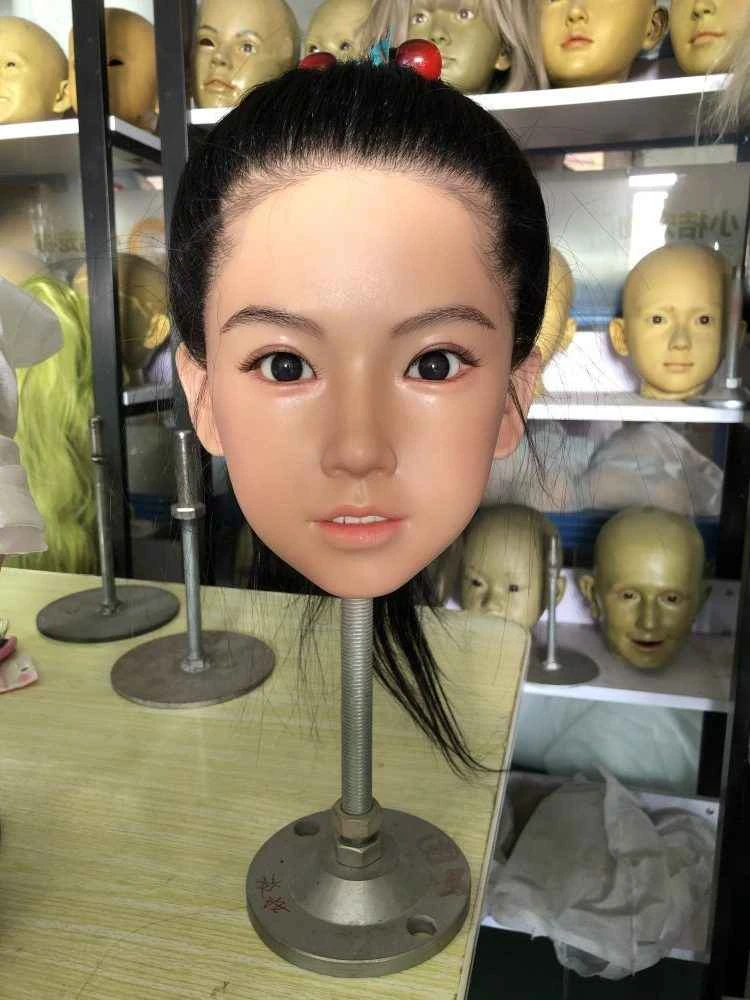
CATDOLL Vivian Hard Silicone Head

CATDOLL Vivian Hard Silicone Head

Articles
2026-02-22

CATDOLL Momoko Soft Silicone Head

CATDOLL Momoko Soft Silicone Head

Articles
2026-02-22