Share this

Automotive assembly line control system based on DeviceNet fieldbus system

2026-04-06 07:37:13 · · #1
I. Introduction DeviceNet fieldbus is the underlying network of NetLinx, a leading industrial control network technology launched by Rockwell Automation, a world-class provider of automation control and information solutions. DeviceNet boasts advantages such as openness, low cost, reliability, and high efficiency, making it particularly suitable for low-level control in industrial fields with high real-time requirements. DeviceNet is now included in the international standard IEC62026-3 (2000-07) for low-voltage switchgear and controlgear—controller-device interface, and has also been listed as a European standard EN50325. Furthermore, DeviceNet is effectively the device networking standard in Asia and the Americas. DeviceNet has received support from numerous manufacturers worldwide, with thousands of products registered conforming to the DeviceNet specification, and millions of DeviceNet node devices in actual application. In North America and Japan, DeviceNet holds the highest market share among similar products, and it also shows strong growth momentum in other parts of the world. Although DeviceNet entered China relatively late, its outstanding advantages have attracted high attention from relevant departments and units in China. On October 8, 2002, DeviceNet was approved as the Chinese national standard GB/T18858.3—2002, and came into effect on April 1, 2003, further promoting the application of DeviceNet fieldbus technology in my country. DeviceNet can be widely used in various industries. Taking China's automotive industry as an example, DeviceNet has been applied to the welding and final assembly lines of FAW-Volkswagen Automotive Co., Ltd. (AUDI A6, BORA A4, JETTA), the welding and final assembly lines of Zhangjiagang Mudan Automobile Plant, the painting line of Qingdao Yizhong Automobile Plant, the bogie painting line of Changchun Bus Plant, and the welding, painting, and final assembly lines of Harbin Aircraft Industry Group Co., Ltd., etc. This article introduces the application of DeviceNet in the FAW-Volkswagen BORA A4 final assembly line. II. Final Assembly Line Design Objectives The design of the FAW-Volkswagen BORA A4 final assembly line is a project to technically upgrade the equipment and control systems of the original final assembly line, based on the development plan of China FAW Group Corporation. The design objective is to meet the requirements of mixed-line production of the BORA A4 and JETTA models, achieving a production cycle of 90 seconds per vehicle and an annual production capacity of 150,000 vehicles. The final assembly line process design adopts internationally advanced modular assembly technology and flexible production line technology for mixed-model production, and is equipped with a highly efficient, reliable, and easy-to-maintain control system to improve the overall vehicle assembly quality. The BORA A4 production line process flow consists of a storage area, a workpiece assembly area, a lifting area, a maintenance area, a testing area, and an off-line area. The mechanized production line system includes the vehicle assembly line (process chain, driven by multiple motors), body conveyor line (accumulation chain), storage line (accumulation chain), and elevators. The system includes 22 stop devices, 10 trolley pushers, and 6 turnouts. Variable frequency speed control is required for both motor drive and control. The controlled equipment is numerous and highly dispersed: approximately 2600 I/O points with a total length of 3000m. To meet the production line design requirements and minimize costs, the original conveyor system was redesigned for greater efficiency while fully utilizing existing equipment and lines. Trolley pushers were added at transfer points between lines to prevent transfer failures. A new balanced rail system was adopted to ensure smooth and reliable production line operation and reduce worker workload. The car assembly line was changed from using a rail to a lift, adding two workstations. A robotic assembly station was also added. The original production line control system, designed many years ago, used traditional PLC centralized control. This system had low control accuracy and was inconvenient to operate. All digital and analog I/O points were wired from the PLC cabinet, resulting in a large number of wires, complex wiring, and a high failure rate, causing significant inconvenience for on-site maintenance and severely impacting production. It was no longer suitable for the production requirements of modern enterprises. Therefore, a high-performance new control system must be designed, which is crucial to ensuring that the production line achieves its predetermined design goals. 2.1 Control System After analyzing and comparing various control schemes, a fieldbus control system with DeviceNet as the underlying network was chosen, as shown in Figure 1. Input devices connected to the DeviceNet network include buttons, emergency stop switches, proximity switches, photoelectric switches, limit switches, etc., while output devices include indicator lights, control valves, frequency converters, etc. The system uses ControlNet to enable communication between different PLCs, completing functions such as monitoring, control, fault alarms, and management information exchange in the central control room. Figure 2 shows the hardware configuration of the Rockwell Automation PLC-5/80C used in the system (which has built-in Remote I/O (RIO) and ControlNet interfaces). Due to the large number of control points and long lines in the system, six 1771-SDN scanners were used, with a total of 12 DeviceNet networks connected to the controlled devices. The 12 DeviceNet networks are named 1DN1, 1DN2, 2DN1, 2DN2, 3DN1, 3DN2, 4DN1, 4DN2, 5DN1, 5DN2, 6DN1, and 6DN2. 1DN1 controls all 14 frequency converters on the production line; 1DN2 controls all FlexI/O nodes on the production line, with most of the devices connected to FlexI/O being devices that could not be directly connected to the DeviceNet network on the original final assembly line; 2DN1 controls the body conveyor line (accumulation chain); 2DN2 controls the reserve line (accumulation chain); 3DN1 and 3DN2 control another reserve line (accumulation chain); and 4DN1 to 6DN2 control the vehicle assembly line (process chain). The vehicle assembly line is highly complex, consisting of 153 workstations. Its main control functions include process emergency stop and interlocking with other equipment. Key equipment includes a chassis marking machine, sunroof assembly robot, glue application robot, assembly robot, windshield glue application robot, driving system control module, powertrain, and testing devices. The system has over 200 nodes. Figure 1 shows the fieldbus control system of the assembly line with DeviceNet as the underlying network. Figure 2 shows the PLC-5/80C hardware configuration. The operating status, operating parameters, and fault information of all field production equipment are transmitted to the controller located in the central control room via the DeviceNet network; various controls implemented by the controller on the field production equipment are also performed via the DeviceNet network. The monitoring computer connected to the EtherNet in the system uses the configuration software RSView32 to display the operating status and operating parameters of each production equipment with rich text and vivid graphics, automatically pop up fault alarm screens, record fault points, and recall relevant control programs and electrical control drawings. It can also automatically record and statistically manage production information, and can transmit alarm information (fault point, fault cause, fault time, etc.) to the remote terminal of the maintenance department. Moreover, the system can control the start and stop of the production line and change control parameters through the controller connected to the EtherNet. The system has a human-machine interface (HMI) installed on the control cabinet through remote I/O to display the operating status, operating parameters, and adjust control parameters of the production equipment. The system features a comprehensive PLC fault automatic diagnosis program and an HMI alarm system, making equipment fault diagnosis extremely fast, convenient, and accurate. The system employs current closed-loop automatic control technology to solve the technical challenges of single-chain multi-drive synchronous control, ensuring the normal and safe operation of the production line. The system control layer uses a redundant ControlNet network to achieve real-time control information exchange with PLC processors in the door assembly line, elevator control system, and instrument panel installation system. 2.2 System Construction and Debugging All signals on site are transmitted to the controller in real time through the DeviceNet network. The controller control signals are also transmitted to the field devices through the DeviceNet network. Therefore, the construction of the DeviceNet network is the foundation of the entire control system. The construction steps are as follows: (1) Make overall plans and lay out the wiring reasonably; (2) Connect the DeviceNet network node devices to the network; (3) Install the communication software RSLinx and the network configuration tool software RSNetworkx for DeviceNet or DeviceNet Manager; (4) Assign a node address to each device to be added to the DeviceNet network and set the correct communication baud rate, because the communication baud rate of all nodes in each segment of the DeviceNet network must be consistent, and no device with duplicate node addresses is allowed; (5) Connect the programming terminal (computer or dedicated programming device) to the network (through the computer communication board or external communication module) and establish communication, that is, configure the DeviceNet driver under RSLinx: DeviceNet Driver (1784-PCD/PCIDS, 1770-KFD, SDNPT) (6) Configure DeviceNet device operating parameters via the network (DeviceNet or upper-layer network ControlNet, EtherNet), such as the device's I/O data triggering method, the size of the device's I/O message, and the device's own operating parameters (such as the inverter's start-up method, maximum frequency, and other operating parameters); (7) Download the device configuration parameters to the node device and DeviceNet Scanner (1791-SDN), and save them to the configuration file of the network configuration tool software (for offline viewing of network information or configuring the same network). The hardware wiring and software configuration of DeviceNet network are very simple, thus greatly shortening the system installation and commissioning cycle. When installing and debugging DeviceNet network hardware, the following should be noted: a. It is recommended to use DeviceNet bus cables and connectors from companies such as Rockwell Automation (this greatly simplifies hardware installation and improves reliability); b. Each network segment power supply should only have one grounding point; c. Correct terminating resistors (120Ω, optional standard terminating resistors provided with the system by companies such as Rockwell Automation) should be installed at both ends of the network bus. The resistance value between the network CAN-H and CAN-L should be 50-70Ω when the system is not powered on. III. Conclusion The automotive assembly line control system based on DeviceNet fieldbus boasts the longest bus length (3000m) and the largest number of nodes (over 200) in China, and the overall system technology has reached the international advanced level. Three years of system operation practice have shown that the system is powerful, safe, reliable, and flexible in operation, creating significant economic benefits for FAW-Volkswagen and greatly improving production efficiency, automation level, and management level, enabling the company to maintain a leading position in the fierce market competition.
Read next

CATDOLL Oksana 109CM TPE (Soft Silicone Head)

Height: 109cm Weight: 15.6kg Shoulder Width: 26cm Bust/Waist/Hip: 52/50/57cm Oral Depth: 3-5cm Vaginal Depth: 3-13cm An...

Articles 2026-02-22

CATDOLL 88CM Q Full Silicone Doll

CATDOLL 88CM Q Full Silicone Doll

Articles
2026-02-22
CATDOLL Mimi Hard Silicone Head

CATDOLL Mimi Hard Silicone Head

Articles
2026-02-22
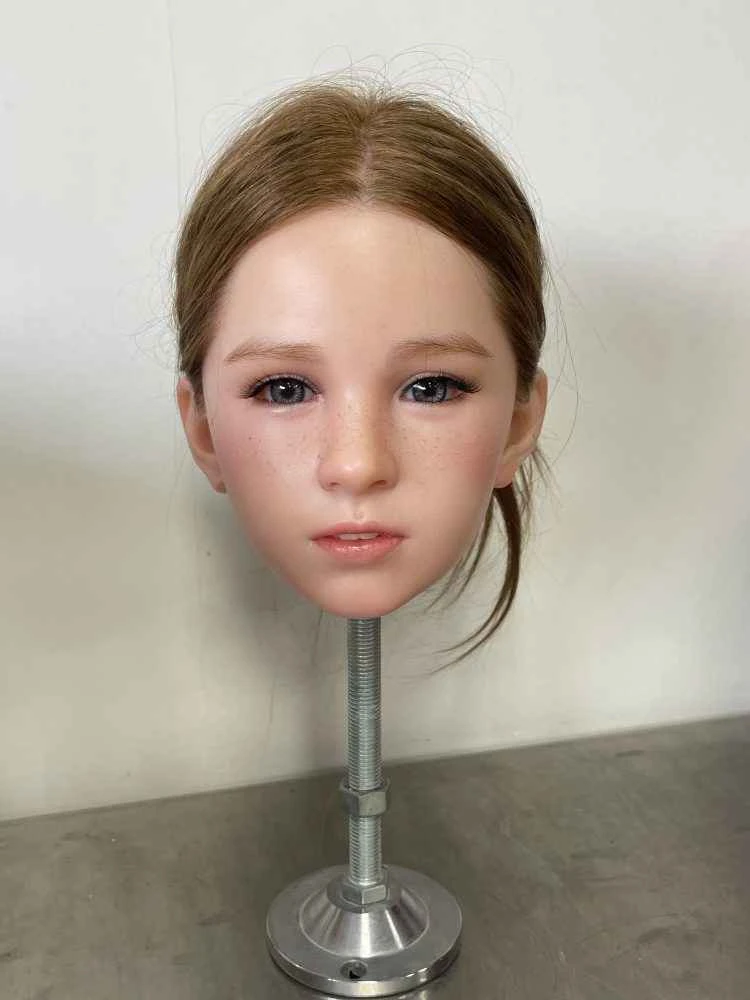
CATDOLL Dolly Hard Silicone Head

CATDOLL Dolly Hard Silicone Head

Articles
2026-02-22