Share this

Design of a Monitoring System for a Distributed Flat-Plate Vulcanizing Unit Based on I-7188EAD/8410

2026-04-06 05:56:44 · · #1
Abstract: This paper mainly introduces the design method, implementation measures, and reliability and security design techniques of a distributed flat-plate vulcanizing unit monitoring system based on ICP DARPA's embedded network controller I-7188, embedded controller I-8410, and remote I/O module I-7000 architecture. The monitoring system and ICP DARPA's control module operate stably and have achieved certain economic benefits. Keywords: I-7188, I-8410, Distributed Control 1. Development Needs and Background The application of rubber and plastic products in China's industry is becoming increasingly widespread, especially oil-resistant rubber and plastic products, which are even more popular. Hubei Jiade Rubber & Plastic Products Co., Ltd. is a professional manufacturer of rubber and plastic products, specializing in submersible pumps, oilfield pumps, and oil pipelines. Because rubber vulcanization requires specific time, temperature, and pressure conditions, traditional vulcanization control methods rely on the experience of operators, which has many drawbacks, leading to under-vulcanization and over-vulcanization of the rubber, greatly affecting the quality of rubber and plastic products. In 2002, we integrated a distributed monitoring system for the company's rubber and plastic vulcanizing machine using the ICP embedded network controller I-7188, the embedded controlled I-8410, and the I-7000 remote control module. Furthermore, we integrated control and production information into the company's MIS management system, facilitating company planning and analysis, and achieving good economic benefits. The system design is summarized below. 2 System Architecture and Composition 2.1 Scheme Selection [align=center] Figure 1: Scheme Selection Diagram[/align] As shown in Figure 1, among the three control schemes, the first scheme, although simple in structure, will prevent the flat vulcanizing machine from operating normally if the I-8421 malfunctions. Furthermore, since many control parameters are stored on the host computer, the burden on the host computer is undoubtedly increased, resulting in relatively poor security and reliability. In the second scheme, although some control is handled by the embedded network controller I-7188EAD, the I-87K4 lacks control functions, also posing potential risks of poor reliability and security. In the third scheme, important control parameters are stored on the host computer. The I-7188EAD plays a dual role; the local control of the flat vulcanizing machine is completed by the I-8410. The I-7188EAD is the master controller in the system, and the I-8410 is the slave controller, satisfying the master-slave requirements of the RS-485 communication protocol. Once the process parameters need to be changed, the I-7188EAD communicates with the host computer to obtain data. In order to improve the reliability of the system, the I-7000 module is added to the system. Once the communication signal of the I-8410 disappears or a fault occurs, the control function is managed by the I-7188EAD and executed by the I-7000 (reused). However, the control function is relatively simple at this time, only temperature and pressure detection, vulcanization timing, and the flatbed client needs to be manually turned on. There is no system equipment fault monitoring, temperature PID adjustment, etc. In the third scheme, dual-machine redundancy is realized by two-level controllers. The local control is also composed of two sets. Only one set has a more complete control function, and the backup set has a simpler control function. Both can realize the control of the flatbed vulcanizing machine, thus realizing the functions of controller redundancy and actuator backup/reuse, meeting the requirements of modern process control [1], greatly improving the safety and reliability of the system, and meeting the user's requirements of "high reliability, high safety, high technology, and high efficiency". 2.2 System Working Principle When the third scheme is adopted, the entire process is as follows: First, the system is turned on, and the server, I-7188EAD, I-8410 and I-7000 all perform a handshake signal detection to check whether the system communication is normal. Since the process parameters are different for vulcanization of different rubber and plastic products, the process control server sends the workpiece number to I-7188EAD and sends the temperature, pressure and time down to I-7188EAD for control of I-7000. I-7188EAD also sends the above information to I-8410 so that I-8410 can perform process control according to the server's instructions. During the control process, I-7188EAD and I-8410 constantly exchange "heartbeat" information. If I-7188EAD still does not receive control information from I-8410 after sending 10 heartbeat messages, I-7188EAD determines that I-8410 communication has failed, sends a digital signal, and takes over the control system to enable I-7000 to start working. Simultaneously, it sends a control signal to disconnect the power to I-8410. One minute later, it sends another control signal to re-energize I-8410 and restore normal operation. After communication is restored, I-7000 exits control. Throughout the entire control process, in addition to its backup execution control function, I-7000 also undertakes real-time control and monitoring of 10 solenoid valves, 12 circuit breakers, and 12 actuators in the steam pipeline. Therefore, the system achieves dual functionality for any controller, saving equipment costs and maximizing the role of each controller, thus meeting design requirements. The architecture diagram of the distributed flat-plate vulcanizing unit control system is shown in Figure 2. [align=center] Figure 2: Architecture diagram of the distributed flat vulcanizing unit control system[/align] The I-7188EAD communicates with the I-8410 and I-7000 via RS-485, with a baud rate of 19200bps. The I-7188EAD is the main controller of the local control unit, while the I-7000 and I-8410 are both controlled devices. The I-7188EAD communicates with the control server via TCP/IP. 2.3 System Configuration 2.3.1 I-7188EAD The I-7188EAD is an embedded network controller with PC functionality, which can also be considered a network protocol converter. It has 512KB FLASH, 512KB SRAM, 2KB EEPROM, 31B NVSRAM, a built-in real-time clock, a watchdog timer, a built-in MiniOS7 operating system, a 64-bit unique hardware serial number, supports user program encryption, contains a 10BASE-T network controller compatible with NE-2000, and supports the TCP/IP protocol. It features a unique dual watchdog safety design, consisting of a software watchdog and a hardware watchdog. In the event of a main control computer crash, all output modules enter a preset safety state, meeting industrial safety requirements. It is easy to use and significantly increases system security. 2.3.2 I-8410 Configuration The I-8410 is a PC-based embedded controller (controlled type) capable of expanding to four parallel control I/O modules. It has 256KB Flash ROM, 128KB SRAM, 2KB EEPROM, a built-in watchdog timer for reliable system operation, and a dedicated MiniOS7 operating system suitable for writing control programs using TC. It has three COM ports, with COM2 being an RS-485 communication port. It also features a unique dual watchdog safety design, allowing for instant restart in case of program crashes, and software watchdog interlocks with each I/O module, significantly improving system security. The modules used, their characteristics, and functions are shown in Table 1. [align=center]Table 1: Selection, Characteristics, and Functions of I-8000 Functional Modules[/align] 2.3.2 Selection of I-7000 Modules The main modules are: I-7011PD programmable thermocouple input module with display, I-7012F fast analog input module, I-7041 isolated digital input module, I-7042 isolated OC gate output module, and I-7080 frequency/count input module. Their functions are the same as those of similar modules selected for I-8410, and will not be repeated here. 3 Software Design 3.1 Communication between I-7188EAD and I-8410 Since both I-7188EAD and I-8410 have control functions, they must cooperate and coordinate to improve the reliability of the system. Therefore, the key to the software design of this system is the communication program between I-7188EAD and I-8410. The communication method and protocol between the two need to be defined. Since both the I-7188EAD and I-8410 have RAM, ROM, and EEPROM, it facilitates system programming and data storage. During program design, the communication heartbeat signal is an I/O signal; they only transmit and store necessary control information. The program is written using TC2.0 and their respective library functions under the MiniOS7 operating system. Its flowchart is shown in Figure 3. [align=center] Figure 3: Communication between I-7188EAD and I-8410[/align] 3.2 I-8410 Control Program The I-8410 control program is relatively simple. Since ICP provides a large number of library functions for controlling the corresponding modules, they can be directly used when writing with TC2.0, greatly facilitating the user. It mainly includes: module initialization, data acquisition and control, data analysis, system fault diagnosis and prompting (outputting to external indicator lights via DO signals), and data communication. 3.3 Process Control Server Program In the control program design process, the process control server mainly communicates with the I-7188EAD. We adopted the OPC server and ActiveX controls provided by ICP DAY, and used KingSCADA configuration software, which greatly facilitated the upper computer programming process. The server is equipped with a Windows 2000 operating system and Microsoft SQL 6.5, facilitating the storage of control information in the enterprise management MIS system, which is beneficial for production management personnel in planning and statistics. This program mainly includes human-computer interaction interface design, database access method design, IE publishing and browsing design, system fault diagnosis design, system configuration design, database design, security design (firewall design), report design, file system management design, and file output management design (report output, printing, and management), etc. 4 Application Experience and Insights Because I-7188 embedded network controller and I-8000 embedded control module of ICP have unique dual watchdog safety design, and have software watchdog interlock with each I/O module, and have dedicated stable MiniOS7 operating system, the safety and reliability of system operation are greatly improved. At the same time, the system adopts controller redundancy and control actuator reuse, which saves investment costs and improves the economic benefits of enterprises and system developers. The system has been running for more than a year and has been running relatively stably, which has improved the quality of rubber and plastic products produced, and significantly reduced the defect rate and scrap rate, improved production efficiency, reduced labor intensity, and was well received by users. In summary, ICP products have enabled system integrators and system users to obtain good economic benefits. References [1] Yu Haisheng et al., Microcomputer Control Technology, Beijing: Tsinghua University Press, 1999 [2] ICP Product Manual
Read next

CATDOLL 146CM Sasha TPE (Customer Photos)

Height: 146cm A-cup Weight: 26kg Shoulder Width: 32cm Bust/Waist/Hip: 64/54/74cm Oral Depth: 3-5cm Vaginal Depth: 3-15c...

Articles 2026-02-22

CATDOLL 131CM Amber Silicone Doll

CATDOLL 131CM Amber Silicone Doll

Articles
2026-02-22
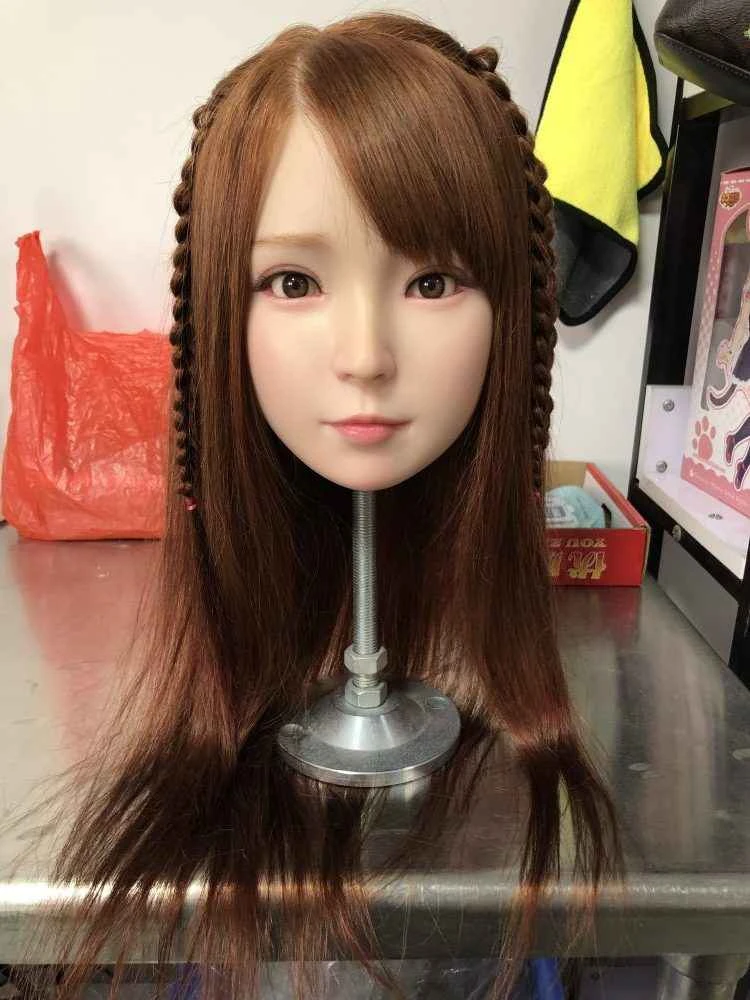
CATDOLL Jo Hard Silicone Head

CATDOLL Jo Hard Silicone Head

Articles
2026-02-22

CATDOLL 108CM Cici

CATDOLL 108CM Cici

Articles
2026-02-22