Share this

Automatic testing technology for remote control systems based on virtual instruments

2026-04-06 07:36:54 · · #1
Abstract: The submarine main engine remote control system is a key component of the submarine's main propulsion system, and its operating status and interface signals are highly complex. Combining the concept of virtual instruments and fully utilizing the powerful capabilities of computers, this paper rationally integrates hardware and software resources, analyzes in detail each step of constructing an automatic testing system, and studies the key technologies in the implementation process. Using standardized and universal hardware resources, coupled with self-developed interface circuits, a hardware platform for the automatic testing system was constructed, realizing excitation and testing functions. Through the development of sophisticated software, complex data analysis and logical reasoning functions were completed. This automatic testing system can perform performance testing on the entire remote control system and its individual subsystems, and can perform detailed fault diagnosis on faulty equipment, locating the fault to the component or circuit. Keywords: remote control system; virtual instrument (VI); automatic test system (ATS); fault diagnosis Abstract: The remote control system of submarine's main marine engine is the key part of submarine's main power system and has various working status. It's interface signal is very complicate. Combined with the thought of virtual instrument, every part to build the automatic test system is analyzed in detail and the key technologies in it's implementation are studied. The hardware platform of the automatic test system is built to accomplish the functions of excitation and test by using the standard and general hardware resources, together with the interface circuits which are self-designed. The application is programmed completely to accomplish the complex functions of data analysis and logic reasoning. This automatic test system can not only test the functions of the remote control system as a integer or any sub-equipment, but also can diagnose the faults of the equipment. instrument (VI); automatic test system (ATS); fault diagnosis 0 Introduction Virtual instrument technology is a product of the deep integration of modern computer technology and instrument technology, and is an important technology in the field of automatic testing today. Its core is to utilize the rapidly developing computer technology, share the internal software and hardware resources of the computer, compile and run instrument software, establish a graphical environment and online help mechanism, complete data analysis and processing functions, and realize the excitation, testing and control functions of the instrument using a flexible virtual software panel [1, 2]. The submarine main engine remote control system is the automatic control, status monitoring and safety protection equipment of the submarine main engine. It is the core component of the submarine's main propulsion system. It is very important for the safe and reliable operation of the submarine's power system, and is related to the safety of the entire submarine. It is a key factor in ensuring the submarine's seaworthiness and completing its combat mission. Therefore, whether in the design and manufacturing stage or in the maintenance stages of the submarine after it enters service, it is necessary to conduct comprehensive testing on all functions of the submarine main engine remote control system to ensure that it meets the combat technical requirements. At present, domestic testing can only be carried out by manual operation and experience judgment, which is complex and inefficient. This testing method is no longer able to keep up with the needs of modern equipment maintenance and support work, and it cannot meet the testing requirements of modern high-tech equipment [3]. In view of this, this paper combines the idea of ​​virtual instruments to study the detailed process of building an automatic testing system, analyzes the key technologies in the implementation process, and develops an automatic testing system for a certain type of submarine main engine remote control system. 1 Test requirements analysis and overall scheme design 1.1 Test requirements analysis According to the working environment of the main engine remote control system and the needs of the testing work, the designed automatic testing system should have the following functions: 1) The self-testing and self-calibration capability of the testing system itself. 2) Programmatic automatic testing and manual auxiliary testing functions. 3) It can provide the excitation signals, simulated loads and other environmental conditions required for the normal operation and fault diagnosis of the tested equipment and its components. 4) It can perform functional testing and performance testing on the main engine remote control system, and the test results should be displayed intuitively. 5) It has signal processing, fault analysis and fault location capabilities, and the fault location should be as specific and accurate as possible. Based on the actual conditions of the equipment [1, 3], the following basic principles should be followed when designing an automatic testing system: 1) The basic goal should be to meet the operational needs of the troops and improve combat effectiveness, ensuring the quality and reliability of weapon systems and improving testability and maintainability. 2) From the perspective of military weapon systems, the design principles of generalization, serialization, and standardization should be adhered to at all levels and stages of the entire life cycle of the ATS, reducing life cycle costs and shortening the development cycle. 3) Modular commodities and technologies should be applied, and an integrated construction method should be adopted to ensure the system's advanced nature, openness, and scalability, and to guarantee the reliability and long-term stability of the testing system itself. 4) Artificial intelligence technology should be applied to study fault diagnosis theories and methods, improve fault diagnosis and isolation levels, and establish an effective fault diagnosis system. 1.2 Overall Design of Automatic Testing System The basic idea of ​​the automatic testing system is to send a test vector to the object under test, receive the response information of the object under the excitation of the test vector, and then analyze and "decide" and "generate" the next excitation signal according to the relationship between excitation and response. This process continues until the excitation sequence and response sequence are analyzed and processed to determine whether the function of the object under test is normal, and then to perform fault analysis and fault location. Based on a detailed analysis of the working principle of the host remote control system and combined with the advanced ideas of automatic testing technology at home and abroad [4-6], the overall testing scheme of the automatic testing system studied in this paper is determined as follows according to the testing requirements: 1) Overall performance test. For all working states of the control system, simulate all input signals of the entire control system, detect its output signals, and determine whether the function of the whole machine is normal. If there is a fault, preliminarily determine the nature and location of the system fault. 2) Sub-unit performance test. According to the working principle and function of each sub-unit, simulate all input signals of each sub-unit, detect its output signals, and determine whether the function of each sub-unit is normal. 3) Fault diagnosis of faulty equipment. Under the control of the industrial control computer, a fault diagnosis excitation vector is sent to the faulty equipment as needed. By collecting the response signals of key electronic components, a reasonable fault diagnosis method is used to find the fault source, locate the fault to the circuit, and locate it to the component as much as possible. 2 System Hardware Design 2.1 Hardware Composition of Remote Control System The submarine main engine remote control system consists of a prime mover remote control device, a clutch protection and signal device, a power supply and signal device, and a prime mover status display device. The connection relationship of each part and the connection relationship with other equipment on the submarine are shown in Figure 1. The dotted line part is the submarine main engine remote control system. The main functions of each part of the remote control system are as follows: 1) Prime mover remote control device. When the prime mover is in the remote control state, it completes the functions of turning, blowing, starting, speed adjustment, normal stopping, emergency regulator stopping, and emergency protection stopping of the prime mover. It displays the running status of the prime mover, alarm signals, and stop signals, and together with the clutch protection and signal device, it provides safety protection for the prime mover. 2) Clutch protection and signal device. Displays the status of the pneumatic tire clutch, receives signals from the entire submarine control system and feeds back signals to it, provides safety protection for the prime mover together with the prime mover remote control device, and controls the working status of the entire remote control system together with the power supply and signal device. 3) Power supply and signal device. After processing the power supplied by the submarine, it distributes the power to other devices according to the working status of the remote control system, and controls the working status of the entire remote control system together with the clutch protection and signal device. 4) Prime mover status reproduction device. It reproduces the running status, alarm signal, shutdown signal, etc. of the prime mover according to the status of each quantity in the prime mover remote control device. [align=center] Figure 1 Composition of the remote control system and its connection relationship with other devices Figure 2 Schematic diagram of the hardware composition of the automatic test system[/align] 2.2 Hardware composition of the automatic test system Virtual instruments have the advantages of less hardware, small size, light weight, strong function, and strong expandability. Like traditional instruments, virtual instruments can be divided into three major functional modules: data acquisition and control, data analysis and processing, and result expression and output. Combining the concept of virtual instruments [2,7], the hardware implementation scheme of the automatic test system is designed as shown in Figure 2. In Figure 2, the object under test is the entire remote control system or a specific sub-unit. The power supply circuit supplies power to the remote control system and the signal conditioning circuit. The remote control system requires a special power supply, necessitating the purchase of a dedicated power supply or the design of a custom power conversion circuit. To achieve automatic testing of the entire remote control system or sub-unit, a dedicated interface circuit and signal conditioning circuit need to be designed. All signals between the signal generator, data acquisition equipment, and the object under test are transmitted through this circuit. Its main functions are: ① to convert the signals (analog, digital, etc.) generated by the signal generator into signals acceptable to the remote control system as needed; ② to convert the signals (analog, digital, etc.) generated by the remote control system into signals acceptable to the data acquisition equipment. The main function of the signal generator is to generate corresponding signals under the control of the industrial control computer, convert them through the signal conditioning circuit, and then send them to the remote control system, thus generating an excitation vector. The main function of the data acquisition equipment is to acquire the response signal of the remote control system under the action of the excitation vector (converted through the signal conditioning circuit) under the control of the industrial control computer, and then send the signal to the industrial control computer for data analysis and processing. The industrial control computer controls the operation of the entire automatic test system under the command of the software, which is also the main way of human-computer interaction. It controls the signal generator to send the excitation vector to the remote control system as needed, and at the same time performs data analysis and processing on the response vector of the remote control system, judges whether the function of the tested object is normal and performs fault diagnosis, and finally displays the judgment result and diagnosis information through the display device or prints it through the printer. 3 Software design of automatic test system There are currently two main types of software development environments for virtual instruments: one is text-based programming languages, such as Visual C++, Visual Basic, C++, LabWindows/CVI, etc.; the other is graphical programming languages, such as LabVIEW, HPVEE, etc. [8]. Compared with text-based programming languages, graphical programming languages ​​have the characteristics of simple programming, intuitiveness and high development efficiency; while text-based programming languages ​​are more flexible, and users can flexibly add functions, and the development cost is lower than that of graphical programming software. Considering that this automatic test system has a large number of signal simulations, signal detections, data processing, and requires a large number of graphical interface processing, LabVIEW is selected as the software development platform. The program flowchart is shown in Figure 3. [align=center]Figure 3 Automatic Test System Software Flowchart Figure 4 Automatic Test System Main Interface[/align] After the system is powered on, it first performs a self-test of the test system itself. If there are no abnormalities, it enters the main interface of the automatic test system, as shown in Figure 4. Users can select test schemes as needed. The test schemes are divided into the following three types: 1) Overall Function Test. Click the "Overall Function Test" button on the main interface to enter the overall function test main interface. When all devices of the control system are normally connected, for all functions of the control system as a whole (power conversion function, signal indication function, prime mover control function, remote control and protection function), the working process of the controlled object is simulated. The input signals required by the control system are sent according to the program settings, and its output signals are detected. The relationship between the input vector and the output vector is used to determine whether the overall function is normal. If the function test is abnormal, the control system has a fault, and the fault is located to the sub-unit. 2) Sub-unit Function Test. Click the sub-unit name button in the "Sub-unit Function" test area to enter the test interface of the corresponding sub-unit. Based on the working principle and function of the sub-unit, the simulation model simulates the working process of the controlled object and the coupling signals of other sub-units connected to it. The required input signals are sent to the sub-unit according to the program settings, and its output signals are detected. The relationship between the input and output vectors is used to determine whether the sub-unit's function is normal. If it is abnormal, the sub-unit is faulty, and the nature and location of the fault can be preliminarily determined depending on the specific situation. 3) Fault diagnosis of faulty equipment. When a fault is detected in a sub-unit through "whole machine function test" or "sub-unit function test," a detailed fault diagnosis of that sub-unit is necessary. Various reasonable and advanced fault diagnosis methods can be used to search for the cause of the fault, locating the fault to the component as much as possible to improve the fault detection rate and minimize missed and false alarms. This system adopts a diagnostic method based primarily on fault tree analysis and supplemented by fuzzy neural network reasoning. The construction of the fault tree for the faulty equipment adopts a combination of theory and practice, that is, based on a detailed analysis of its working principle and combined with extensive experience in manual diagnosis, a reasonable fault tree is constructed. During fault diagnosis, the fault tree structure is first stored in the computer, and then a top-down approach is used for fault search and location. During testing, the industrial control computer continuously sends fault excitation vectors to the faulty equipment as needed, while simultaneously collecting response vectors of key electronic components. Fault location is determined based on the relationship between the excitation and response vectors. When assisted reasoning is required, a fuzzy neural network reasoning method is used to ultimately find the true cause of the fault. When manual assistance is needed, the software prompts the user to perform assisted testing and provides methods for manual assistance. 4 Conclusion This paper analyzes in detail the various stages of constructing an automatic testing system based on virtual instruments and studies the key technologies in the implementation process. Using LabVIEW as the development environment, an automatic testing system for a certain type of submarine main engine remote control system was developed. This automatic testing system can perform performance testing on the entire remote control system and its individual subsystems, and can perform detailed fault diagnosis on faulty equipment. Practical use shows that the automatic testing system has complete functions, an intuitive interface, is easy to operate, and has a high fault diagnosis rate. The author's innovations are: 1) Researching the key technologies for applying virtual instrument technology to the automatic testing process of remote control systems. 2) By rationally integrating software and hardware resources and applying the above technologies to practice, an automatic testing system for the entire remote control system and its sub-systems was developed. References [1] Huang Zhigang. Research on key technologies of automatic test system for airborne radio equipment [D]. Beijing: Beijing University of Aeronautics and Astronautics, 2002. [2] Guiehu W.. Virtual instruments and their application in experiments [J]. Proc. of ICEMI, 1997: 582-584. [3] GJB 2547-95, Equipment Testability Outline, 1995. [4] Zhu Daqi. Research on fault diagnosis technology of avionics and electronic equipment [D]. Nanjing: Nanjing University of Aeronautics and Astronautics, 2002. [5] L. E Wang, KC Tall, XD Jiang, et al. A flexible automatic test system for rotating-turbine machinery [J]. IEEE Transactions on Automation Science and Engineering, 2005, 2 (1): 1-18. [6] Zou Minghu, Wang Zhiyun, Gao Fusheng et al. Research on intelligent fault diagnosis system for radar printed circuit board based on fuzzy neural network [J]. Microcomputer Information, 2004, 20(12): 12-26. [7] Chen Guangyu, Mao Jihong, Lin Chunxun. Modern Electronic Testing Technology [M]. Beijing: National Defense Industry Press, 2000. [8] Cao Lingzhi. Modern Testing Technology and Virtual Instruments [M]. Beijing: Beijing University of Aeronautics and Astronautics Press, 2004.
Read next

CATDOLL Q 88CM TPE Doll

Height: 88cm Weight: 11.5kg Shoulder Width: 25cm Bust/Waist/Hip: 49/45/51cm Oral Depth: 3-5cm Vaginal Depth: 3-13cm Ana...

Articles 2026-02-22
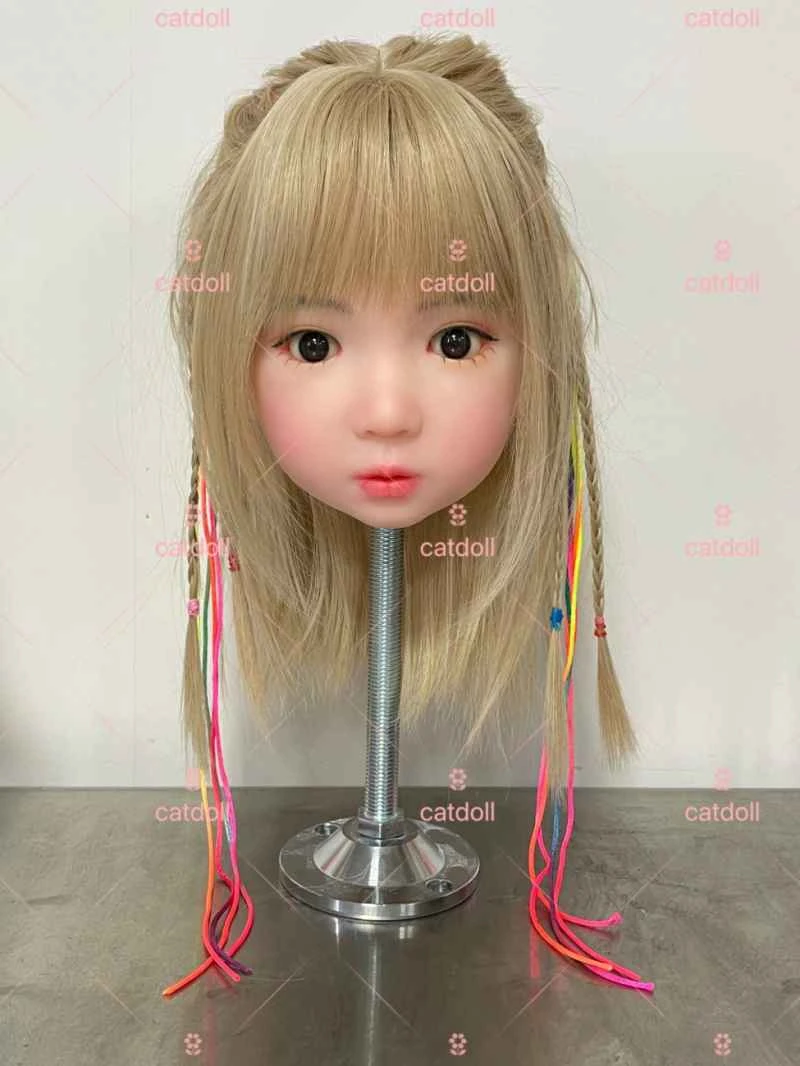
CATDOLL Maruko Soft Silicone Head

CATDOLL Maruko Soft Silicone Head

Articles
2026-02-22

CATDOLL Q 88CM TPE Doll

CATDOLL Q 88CM TPE Doll

Articles
2026-02-22

CATDOLL 108CM Coco

CATDOLL 108CM Coco

Articles
2026-02-22