Share this

Applications of Delta Electronics CNC and Servo Systems in Dispensing Machines

2026-04-06 05:29:52 · · #1
This article mainly introduces the successful application of Delta Electronics' PUTNC-H4-4 CNC system and A-series servo motors in the dispensing machine, an important piece of equipment on the mobile phone casing production line. Applying the control principles of CNC systems, and based on the characteristics of Delta Electronics' CNC products, the article discusses in depth the servo motor debugging and related parameters. 1 Introduction Mobile phones, as fashionable consumer products, have rapidly developed into a hot market demand. The aesthetics and quality of mobile phones are important factors for consumers when choosing a phone. The dispensing machine is a crucial piece of equipment in the production of aesthetically pleasing mobile phone casings. To achieve maximum output, the efficiency of the production line must be considered. Therefore, improving the production efficiency of the dispensing machine is of great significance. 2 Analysis of the CNC System of the Dispensing Machine 2.1 System Requirements Analysis: The CNC-controlled dispensing machine has four axes, using four servo controllers and servo motors: one X-axis, two Y-axis, and one Z-axis. Input signals include 21 signals such as emergency stop, manual/automatic switch, manual dispensing, pause, return to zero, left and right limit input signals, and servo alarm signals. The control flow involves using the CNC system to control the on/off signals of the four servo controllers, servo motors, and four dispensing units. During automatic operation, the two platforms controlled by the Y-axis work alternately. The X-axis and two Y-axis require linear or circular interpolation, while the Z-axis needs to traverse dispensing surfaces at different heights. Product changes are frequent, requiring manual adjustment of the dispensing point after each change before resuming single-step or automatic operation. Functions and Features: 1. All axes utilize ball screws and servo motors, ensuring smooth, accurate, and correct dispensing. 2. Accurate and uniform dispensing. 3. Adjustable dispensing volume and speed. 4. LED Chinese menu display. 5. Touch-sensitive button operation. 6. Simple, convenient, and intuitive control. 2.2 Customer Solution Analysis The customer's original control solution was: a 5.7-inch LCD screen + axis card controller + servo controller + actuator control scheme. The shortcomings of this control scheme are: 1. The system's stability and anti-interference capabilities are very poor; 2. The system control is completely open-loop, meaning the control board directly controls the servo controller via pulses; this results in deficiencies in smooth, accurate, and correct dispensing for the user; 3. The G-code and M-code functions are insufficient, as it cannot directly execute code programs generated by CAD or other graphic editing software, making it very inconvenient for users. [IMG=Figure 1 Automated Servo Block Diagram of Dispensing Machine]/uploadpic/THESIS/2007/11/20071114154324407883.jpg[/IMG] Figure 1 Automated Servo Block Diagram of Dispensing Machine [IMG=Figure 2 Servo System Wiring Diagram]/uploadpic/THESIS/2007/11/20071114154809540947.jpg[/IMG] Figure 2 Servo System Wiring Diagram 3 Delta Electronics Automation Servo System Design 3.1 The design of the dispensing machine requires four axes of control: X, Y (two axes), and Z. However, the X and Y axes (two axes) need to perform interpolation operations. During interpolation, the G-code machining software instructions only support X and Y, X and Z, and Y and Z. To be compatible with G-code programs generated by CAD and other graphic editing software, two Y axes cannot be used. Therefore, our solution is to use a Delta Electronics four-axis CNC system (PUTNC-H4-4): the X-axis controls the original X-axis's horizontal movement; the Y-axis controls the original Y1 axis, interpolating with the horizontal X-axis to control the first dispensing platform; the Z-axis controls the original Y... The system uses two axes: the X-axis, which interpolates and controls the second dispensing platform laterally; and the A-axis, which controls the original Z-axis to move to different heights of the dispensing surface. This allows the control system to directly execute code programs generated by CAD and other graphic editing software. Delta's CNC system itself has 24 input points and 16 output points, which is sufficient for the equipment's I/O points. Delta's A-series servo motors use the most advanced robust control theory (PDFF), ensuring excellent performance and smooth, accurate, and correct positioning even under large variations in servo motor load inertia. Based on the customer's technical requirements and the shortcomings of the original control scheme, we selected a control scheme based on Delta Electronics' CNC system. The system consists of a CNC system, a servo control system, and actuators, as shown in Figure 1. The system electrical wiring is shown in Figure 2. The electrical control cabinet image is shown in Figure 3. [IMG=Figure 3 Automated Servo Control Cabinet for Dispensing Machine]/uploadpic/THESIS/2007/11/2007111415513294695G.jpg[/IMG] Figure 3 Automated Servo Control Cabinet for Dispensing Machine [IMG=Figure 4 ASDA Servo Principle]/uploadpic/THESIS/2007/11/2007111415542149393K.jpg[/IMG] Figure 4 ASDA Servo Principle 3.2 The PUTNC-H4-4 series CNC system is the core control platform in the CNC system. The Delta H4 series PUTNC-H4-4 is a 5.7” monochrome LCD four-axis Vcmd controller, including one AB208 input board and one AB209 output board. The main functions and features of PUTNC-H4-4 are: (1) Open system architecture, with embedded programmable PLC, applicable to various industrial machinery and automation equipment. (2) High-definition LCD display, users can plan the screen content themselves, and can also connect to DELTA HMI via RS232, making the interface more user-friendly. (3) Full-function CNC keyboard, which can be customized with PLC development, making operation more flexible. (4) Advanced models provide up to 4 servo axis interfaces, with a response speed of up to 1000Kpps, resulting in faster motion speed. (5) The resolution can be set up to 7 digits, and with different detection devices, a semi-closed loop/closed loop control architecture can be realized, resulting in higher control accuracy. (6) It provides up to 2 sets of D/A outputs and A/D inputs. (7) Provides standard 24-point input and 16-point output. If needed, an I/O expansion unit can be added to expand to 32-point input and 32-point output. (8) It has master-slave mode function and passive ENCODER feedback function, making it easy to build master-slave following and synchronous trimming functions. (9) In addition to supporting standard G-code NC programming, it also provides variable table programming and teach function programming functions, making programming more flexible. (10) MACRO macro instruction can perform mathematical and logical operations, making NC programming more powerful. (11) The program storage capacity is 256K bytes, and the NC program group is up to 1000 groups. (12) Provides RS232C standard interface, which can be connected to a personal computer (PC) to realize DNC online machining function. 3.3 The servo control system is configured with 3 sets of ASD-A0121LA type and 1 set of ASD-A0221LA type. The ASDA servo principle adopts advanced robust control theory (PDFF), as shown in Figure 4. (1) Advantages of PDFF robust control: • The system maintains excellent performance even under large load inertia variations; • It has different compensation controls for commands and disturbances; • Stability is fully guaranteed; • It has excellent damping stiffness and excellent low-speed rotation characteristics; • The overshoot is very small. (2) Disadvantages of PDFF robust control: The control parameters need to be obtained by complex mathematical calculations, and the user cannot adjust them himself. In this regard, the design can use ten robust controllers contained in the driver according to the size of the damping stiffness for the user to choose from. 3.4 Planning and connection of CNC system I/O points The planning and connection of CNC system I/O points are shown in Table 1. 3.5 Delta Servo System Debugging (1) Manual Debugging. After the mechanical installation and electrical connection of the entire system are completed, first use the manual control mode of the host system or Delta servo, and set all servo parameters P0-02 to 14, so that the X and Y axes of the mechanism can move back and forth. The rotational inertia JL/JM applied by the servo on this mechanism will be displayed on the servo display screen. We use the Delta servo debugging software GAIN.EXE to input the rotational inertia JL/JM displayed by the servo and the response bandwidth BW calculated by us through debugging into the GAIN.EXE software. In the dispensing machine, we tested that the rotational inertia JL/JM and the response bandwidth BW of the servo are 80. We calculated the parameters we need and manually input these parameters into the servo controller. The dispensing machine can then run normally. (2) Automatic debugging. This debugging is simpler than manual. First, the moment of inertia JL/JM should be tested as in manual debugging. Input this value into parameter P1-37, and then set parameter P2-31 to 64 and P2-32 to 5. Then the dispensing machine can run normally. Manual adjustment is much more accurate than automatic adjustment. A set of parameters most suitable for the whole mechanism can be tested through multiple processing tests. However, manual adjustment takes a long time and a lot of time. At the same time, in the process of mass production, the input of servo parameters is also very inconvenient. Delta A-series servos have high performance, short settling time, and a wide range of frequency adjustment parameters in dispensing machine applications. Therefore, we use automatic adjustment more often in the normal application of dispensing machines. (3) Explanation of CNC system parameters. Explanation of parameters that need to be changed in the application of Delta Electronics' CNC system in dispensing machines: 0093: 00000256: Master-servant function setting; 256 = setting single-section non-stop mode; 0118: 00000100: X-axis resolution denominator setting (number of pulses per encoder revolution); 0119: 00000120: X-axis resolution numerator setting (lead screw pitch); 0120: 00000100: Y-axis resolution denominator setting (number of pulses per encoder revolution); 0121: 00000120: Y-axis resolution numerator setting (lead screw pitch); 0122: 00000100: Z-axis resolution denominator setting (number of pulses per encoder revolution); 0123: 00000120: Z-axis resolution numerator setting (lead screw pitch); 0124: 00000100: A-axis resolution denominator setting (number of pulses per encoder revolution); 0125: 00000120: A-axis resolution numerator setting (lead screw pitch); 0130: 00000001: X-axis sets the direction of return to the machine origin; 0 = positive, 1 = negative; 0131: 00000001: Y-axis sets the direction of return to the machine origin; 0 = positive, 1 = negative; 0132: 00000001: Z-axis sets the direction of return to the machine origin; 0 = positive, 1 = negative; 0133: 00000001: A-axis sets the direction of return to the machine origin; 0 = positive, 1 = negative; 0154: 00000001: X-axis sets the rotation direction of the servo motor; 0 = positive, 1 = negative; 0156: 00000001: X-axis sets the rotation direction of the servo motor; 0 = positive, 1 = negative. [IMG=Table 1] [I/O Point Planning]/uploadpic/THESIS/2007/11/20071114155749916920C.jpg[/IMG] Table 1 I/O Point Planning (4) Description of ASDA Servo Parameters. Description of parameters that need to be changed in the application of ASDA servo in dispensing machines. Here we take the X-axis parameters as an example. P0-02:14: Display of the status of the driver; used to display the rotational inertia of the mechanism. P1-01:2: Setting of control mode and control command input source. P1-37:11: Load inertia ratio of servo motor; used to set the load inertia ratio of servo motor in automatic mode. P1-44:12, P1-45:10: Numerator and denominator of electronic gear ratio; to make the distance of movement of the ball screw and other mechanisms driven by the servo motor the same as the distance required by the host computer. P2-00:125: Position control gain; mainly controls the responsiveness of the servo position loop. P2-04:5526: Speed ​​Control Gain; mainly controls the responsiveness of the servo speed loop; P2-06:80: Speed ​​Integral Compensation; controls the fixed deviation of the servo motor and mechanism, and the jitter of the entire mechanism; P2-25:3: Resonance Suppression Low-Pass Filter; used to set the time constant of the resonance suppression low-pass filter; P2-26:14: External Interference Resistance Gain; used to increase resistance to external forces and reduce overshoot during acceleration and deceleration; P2-31:64: Automatic and Simple Mode Setting; used to set the response bandwidth in automatic mode; P2-32:5: Gain Adjustment Method; sets the servo adjustment mode to PDFF automatic mode, i.e., the load inertia ratio is fixed, and the servo response bandwidth is adjustable. 4 Conclusion Dispensing machines are crucial equipment in mobile phone casing production lines, PCB production lines, and SMT mixed assembly production lines, with broad application prospects. Delta CNC dispensing machines can effectively reduce production cycle time. For improved production efficiency and equipment stability, servo automation also relies on scientific management, excellent operational coordination, and proper equipment maintenance. With increasingly fierce market competition, this project will create significant economic benefits in more and more enterprise applications. (Proceedings of the 2nd Servo and Motion Control Forum; Proceedings of the 3rd Servo and Motion Control Forum)
Read next

CATDOLL 101cm TPE Doll with Anime A-Type Head – Cute Petite Body

Height: 101cm Weight: 15.5kg Shoulder Width: 26cm Bust/Waist/Hip: 57/50/66cm Oral Depth: 3-5cm Vaginal Depth: 3-13cm An...

Articles 2026-02-22

CATDOLL 123CM Sasha TPE

CATDOLL 123CM Sasha TPE

Articles
2026-02-22
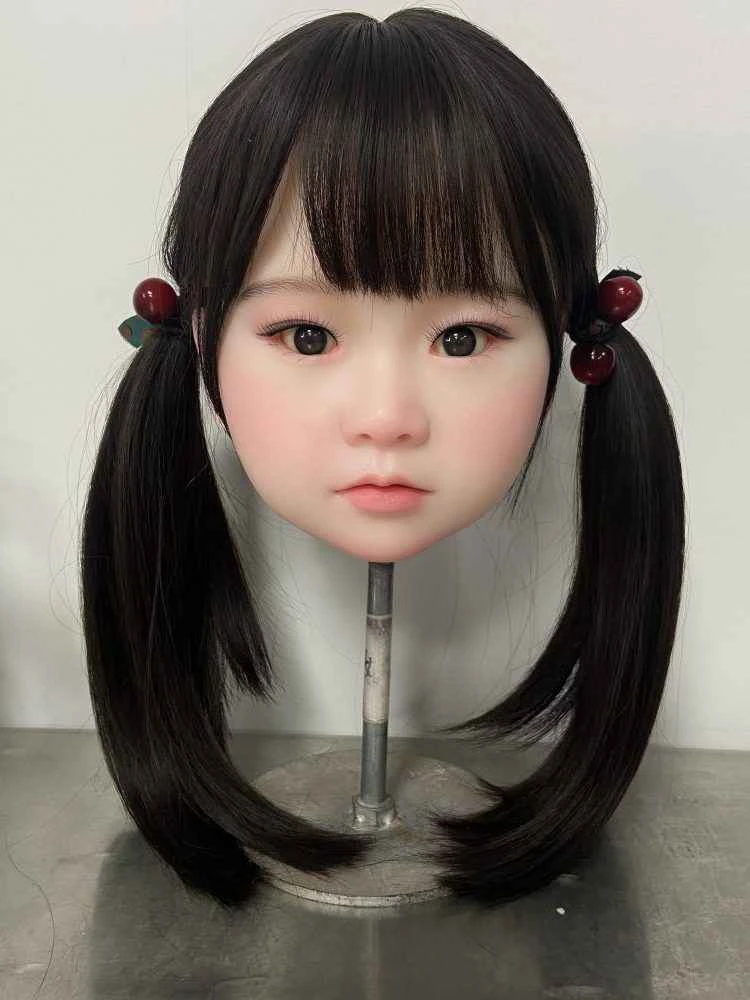
CATDOLL Momoko Soft Silicone Head

CATDOLL Momoko Soft Silicone Head

Articles
2026-02-22
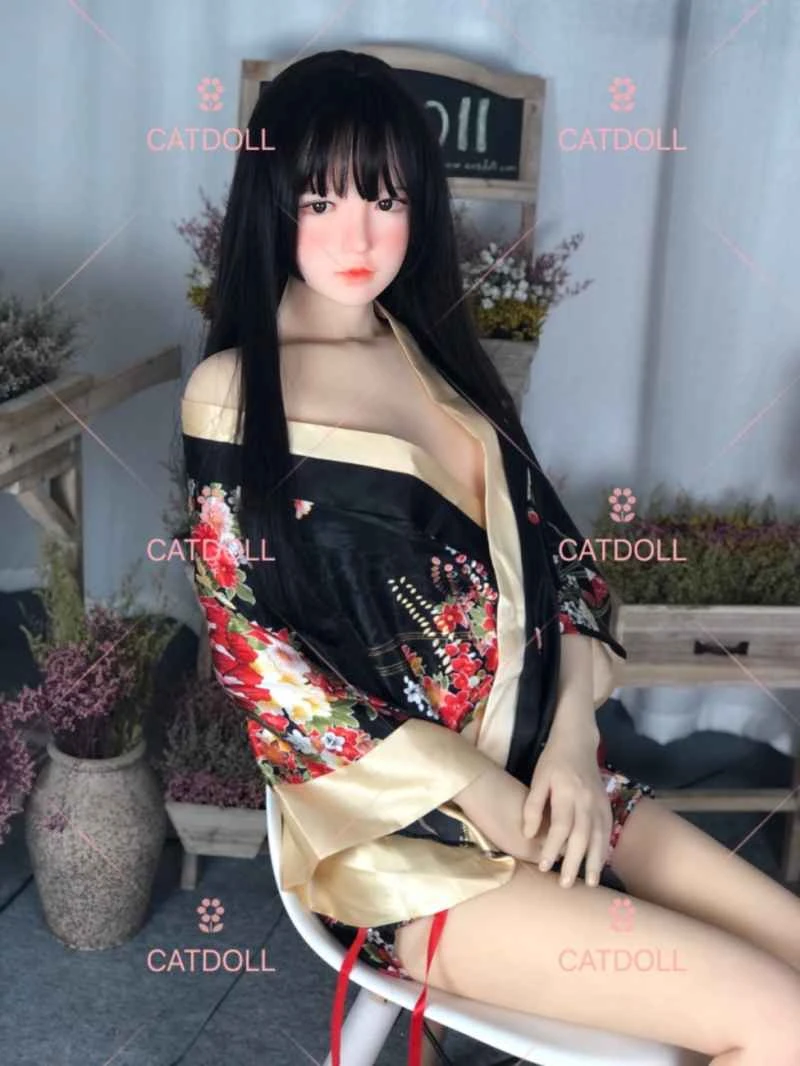
CATDOLL 166CM Hanako TPE

CATDOLL 166CM Hanako TPE

Articles
2026-02-22