Share this

Application of S7-200CN PLC and EM253 Position Control Module in a Bending and Straightening Machine

2026-04-06 07:05:36 · · #1
Abstract: In today's competitive market with fluctuating non-ferrous metal prices, improving product quality and grade is particularly important. In the copper processing industry, the uniformity of the shape and performance of copper strips, in addition to being controlled during rolling and annealing processes, also requires processing through a tension bending straightening machine to achieve optimal performance and enable products to capture the market. The principle of the tension bending straightening machine is: through repeated stretching and bending, the internal structure of the copper strip is redistributed, stress is released, the shape is improved, and the stress distribution is made uniform, thereby improving product performance and quality. Our company, through the use of imported tension bending straightening machines and the digestion of their design concepts, has independently designed, processed, and manufactured a tension bending straightening machine that meets our own production needs. Its production performance is good, and it should be considered a successful transformation. This has replaced imported equipment while significantly reducing manufacturing costs. The control system uses a Siemens S7-200 module for control, and a TD400C text display for operation and display. Keywords: Replacing imports, strip shape, positioning 1. Mechanical structure diagram: The upper frame can be flipped over as a whole for cleaning and replacing rollers, and the inclination can be adjusted. The lower straightening roller, driven by a worm gear jack, can move up and down on a guide rail. It has one inlet and one outlet, and the opening degree of the inlet and outlet is adjusted, which means adjusting the size of the gap between the lower and upper straightening rollers, thereby changing the curvature of the copper strip. The adjustment is completed by servo positioning. A wedge-shaped adjustment block is also installed in the lower roller for fine adjustment of the local plate shape, and the actual adjustment position is fed back by a displacement sensor. 2. The hardware configuration of the control system is shown below: It uses Siemens S7-200 CN products and utilizes a positioning module to control the AC servo driver to achieve precise positioning of the AC servo motor. The EM235 module collects the feedback signal from the displacement sensor to control the wedge adjustment amount. The three wedge adjustments are driven by three AC motors, and the rotation speed of these three motors is simultaneously controlled by an AC frequency converter. 3. System Design Philosophy: The CPU224XP CN is used as the processing core of the control system. Its special function modules are fully utilized to achieve servo positioning and displacement data acquisition. The TD400C text display with dual function keys is used for operation, data monitoring, parameter setting, and fault alarms. A) The positioning module EM253 provides various pulse output drive functions, easily connecting to various drive devices to achieve positioning and stepping control. Its maximum pulse output frequency can reach 200kHz, enabling precise positioning. Since this project requires controlling two servo drives, two positioning modules are used. Position control parameters and variables can be easily configured using the position control wizard in the programming software, eliminating the need for complex programming. It provides functions such as manual control speed mode, absolute or relative position mode, current positioning data reset, motion trajectory preset, and mechanical backlash compensation. B) The analog module EM235 has four input channels and one physical output channel, all capable of receiving current or voltage input/output signals. Three displacement sensors output 4-20mA analog signals, requiring only one analog module. C) The TD400C text display provides eight buttons in two rows and a four-line display. The button arrangement facilitates operation such as starting, stopping, raising, lowering, and moving the device forward and backward. This text display can show 80 different screens, and different button functions can be defined in different screens, greatly expanding the number of buttons. The programming software also provides a text display wizard, which can define the display screen and button variables, making it easy to implement the required functions during programming. 4. System Control Concept: 1) This system adopts a buttonless operation and indicator light display, utilizing the TD400C text display for operation and display. It has three operation and status screens, one parameter setting screen, three data calibration screens (engineer screens), and seven fault screens (which automatically pop up according to the fault situation). The up and down arrow keys on the panel are used to flip through the screens and switch between them. In different operation screens, the F1, F2, F3, F5, F6, and F7 buttons perform different operation controls, and corresponding status data is displayed, making operation very convenient and transparent. 2) Two positioning modules EM253 emit pulse signals to control two servo drives respectively, enabling forward and reverse control. The equivalent relationship between the pulse count and the actual position data can be calculated using known data such as the mechanical transmission ratio, the number of pulses per revolution of the servo motor, and the electronic gear ratio. The rotary pulse encoder uses the high-speed counter HC0 function to count and detect the tilt position. The encoder is installed on the end shaft of the tilt adjustment motor, and the actual tilt amount (in millimeters) can be obtained after conversion. 3) In the roller system adjustment screen, buttons F1, F5, F2, and F6 control the manual lifting and lowering of the inlet and outlet roller systems respectively; F3 and F7 control the tilt adjustment of the roller system; F4 and F8 command the roller system to move to the zero point and the threading position respectively. 4) In the plate shape adjustment screen, buttons F1, F2, F3, F5, F6, and F7 control the lifting and lowering adjustment of the three wedge blocks respectively, and the displacement is detected by a simulated position sensor, converted, and displayed. 5. System Control Features ● The CPU224XP CN boasts powerful processing capabilities, enabling various small-to-medium-sized controls. As a domestically produced device, the CN is cheaper than imported models without any functional changes, significantly improving its cost-effectiveness. ● The EM253 provides pulse signals with a maximum speed of 200kHz, satisfying almost all servo system control requirements. ● The TD400C's button and text display functions facilitate operation and make the user interface highly transparent, saving on numerous operation buttons, instruments, and PLC input/output modules. ● The programming software provides instruction wizards for special modules, making it very easy to use without complex programming processes. ● The system hardware is compact; such complex and precise control can be achieved with just a small control box. Main References: 1. Siemens S7-200 System Manual 2. TD400C User Manual
Read next

CATDOLL Maruko 88CM TPE Doll

Height: 88cm Weight: 11.5kg Shoulder Width: 25cm Bust/Waist/Hip: 49/45/51cm Oral Depth: 3-5cm Vaginal Depth: 3-13cm Ana...

Articles 2026-02-22

CATDOLL 135CM Tami

CATDOLL 135CM Tami

Articles
2026-02-22
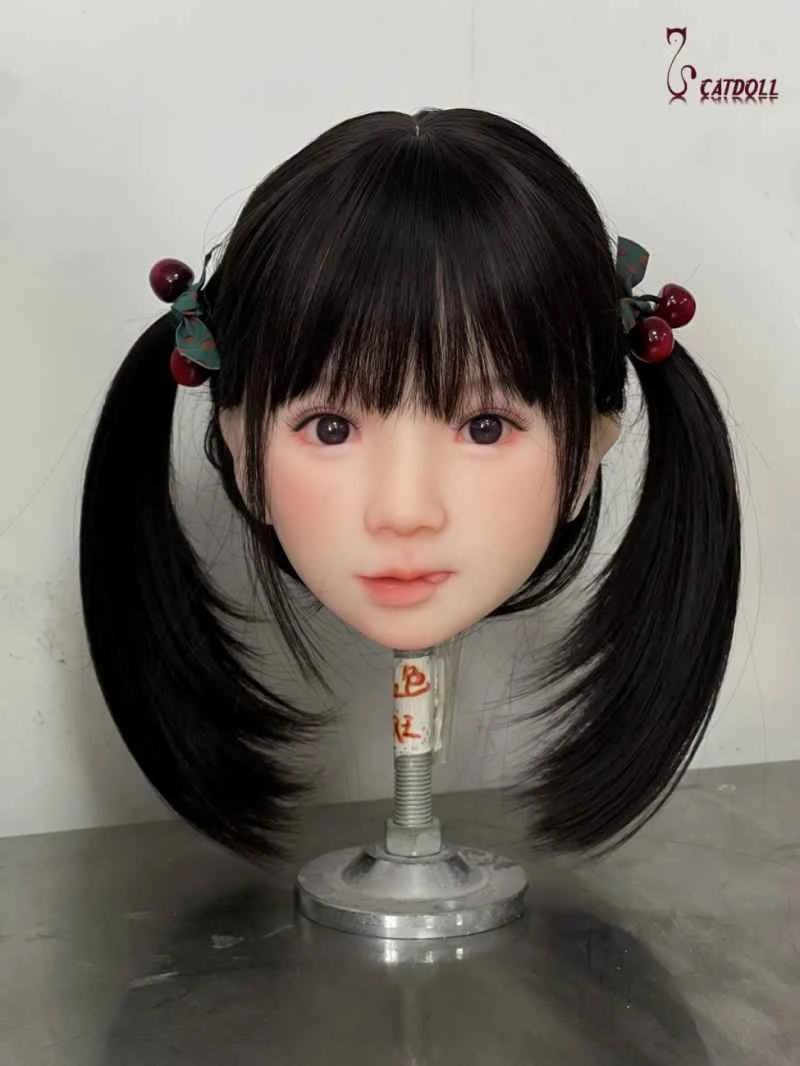
CATDOLL Himari TPE Head

CATDOLL Himari TPE Head

Articles
2026-02-22